Column · @andylmbv523
Why Jamaican Food Is More Than Just a Meal

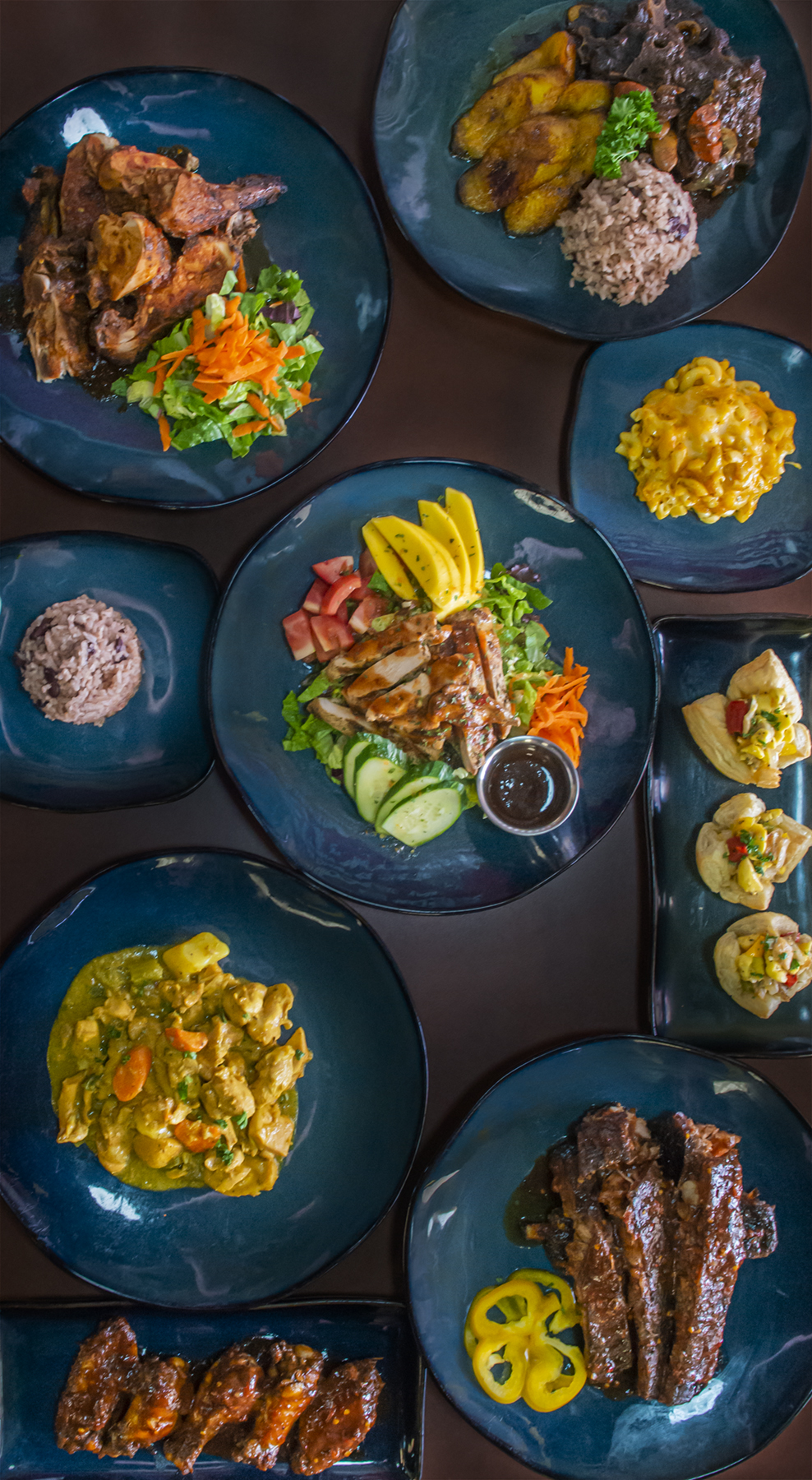
Jamaican food is easy to flatten into a few familiar images: jerk chicken on a grill, a plate of rice and peas, a patty grabbed on the way home. Those dishes are real, beloved, and worth every bit of their reputation. Still, reducing Jamaican food to a set of popular menu items misses the deeper truth. In Jamaica, and across Jamaican communities abroad, food carries memory, class, geography, migration, scarcity, celebration, improvisation, and pride. It is everyday survival and public performance at the same time.
Spend enough time around Jamaican kitchens, street vendors, market stalls, cookshops, beach grills, and family tables, and one thing becomes obvious. Meals are rarely just about eating. They are about who cooked, where the ingredients came from, what was available that week, who got paid on Friday, who came back from foreign, who is visiting from country, and whose pepper tolerance is more talk than fact. Jamaican food announces identity, but it also records history with unusual honesty.
That is part of what makes it so compelling. It is not polished into blandness. It still tastes like a place shaped by Indigenous roots, African knowledge, European colonial rule, Indian and Chinese migration, trade routes, and generations of people making something rich under hard conditions. The result is a cuisine with a strong point of view.
A cuisine built from history, not trend
You cannot understand Jamaican food without understanding that it was formed under pressure. Enslaved Africans brought techniques, palate, agricultural knowledge, and a discipline of cooking that turned limited ingredients into dishes of depth. Colonial systems imposed scarcity and hierarchy, yet people still built flavor through fire, spice, preservation, and careful use of provisions. Later, indentured laborers from India and migrants from China added ingredients and approaches that settled naturally into the island’s cooking life.
That historical layering is why a Jamaican table can feel both tightly rooted and wide open. Curry goat makes perfect sense in Jamaica, not as an import copied intact, but as a dish transformed by local seasoning, Scotch bonnet heat, and the practical rhythm of communal cooking. Escovitch fish reflects European methods of pickling and frying, yet the sharpness, the peppers, the use of local fish, and the way it appears at beachside gatherings make it distinctly Jamaican. Even a simple breakfast of ackee and saltfish tells a larger story. Ackee traveled from West Africa and became national food. Salt cod arrived through colonial trade networks and became foundational because preserved fish could survive long journeys and unreliable storage.
What emerges is not fusion for fusion’s sake. Jamaican food did not become complex because chefs were experimenting for novelty. It became complex because people adapted, borrowed, resisted, and made good food from the realities in front of them. That matters. It gives the cuisine a seriousness that many trend-driven food conversations miss.
The island shows up on the plate
One of the biggest mistakes outsiders make is treating Jamaican food as monolithic. The island is not one kitchen. Regional differences, rural and urban habits, access to fresh seafood, the elevation of farming areas, and local taste preferences all shape what people cook and how they season it.
On the coast, seafood can be central in ways that inland households experience differently. In fishing communities, fried fish with festivals, bammy, or rundown is not just a restaurant pairing, it is part of ordinary food culture. In hilly farming regions, yam, green banana, dasheen, pumpkin, and callaloo carry more weight in daily meals. Town life brings its own rhythm, with patties, soups, cookshop lunches, and pan chicken standing in for the slower pace of country cooking. A person raised in St. Elizabeth may speak about produce with a different kind of authority than someone whose food memories are tied to Kingston street corners and corner shops.
The landscape also shapes appetite. Jamaican food often makes profound sense in the climate and terrain that produced it. Pepper, salt, smoke, acid, starch, and sweet notes are not accidental. They answer heat, labor, preservation, and hunger. A bowl of mannish water after an early morning gathering, or pepper pot soup on a rainy day, lands https://ameblo.jp/lanedyad838/entry-12982485174.html differently when you understand the environment around it. These are not random dishes in a catalog. They are responses to life on the island.
Flavor is treated as serious business
People who know Jamaican food well understand that seasoning is not a minor step, it is the foundation. The cuisine asks for confidence with aromatics and spice. Scallion, thyme, garlic, onion, allspice, ginger, pimento, Scotch bonnet, black pepper, and browning are not there for decoration. They are part of a logic. Meat must be properly seasoned. Fish must taste alive with salt, acidity, and pepper. Vegetables should carry depth, not serve as bland obligation.
That philosophy is one reason Jamaican food can feel so emotionally satisfying. The food is not shy. It does not apologize for intensity. A jerk marinade should penetrate. A curry should bloom, not sit flat and dusty. A stew should taste like time. Even a humble plate of boiled green banana and dumplings can feel complete because the saltfish or mackerel beside it was handled with precision.
There is also a practical intelligence in this approach. Strong seasoning developed in part because it made affordable cuts, preserved ingredients, and simple staples far more compelling. It turned necessity into signature. That ability to build depth from what is on hand remains one of the defining strengths of Jamaican cooking.
Jerk is more than a flavor label
Outside Jamaica, jerk has been stretched into a generic seasoning term. You see it on chips, sauces, sandwiches, wings, even items that barely nod to the original method. The real thing is more demanding and more interesting. Jerk is not just a taste profile. It is a technique, a tradition, and a direct link to resistance and survival.
Its roots are often associated with the Maroons, communities formed by formerly enslaved Africans who escaped into Jamaica’s interior and developed ways of preserving and cooking meat discreetly. Seasoning, smoking, slow cooking, and the use of pimento wood created food with both purpose and character. That history matters because it turns jerk from branding into inheritance.
When jerk is done properly, the layers are obvious. There is heat, yes, but also sweetness, smoke, herbal sharpness, and the unmistakable perfume of allspice. Good jerk should not taste one-dimensional. It should unfold. The best versions also show restraint. Too much sugar muddies it. Too much anonymous heat flattens it. Too much sauce after grilling can feel like compensation for weak marinade.
Anyone who has stood near a roadside jerk pan knows the experience is social as much as culinary. Smoke catches your clothes. Someone is arguing lightly about whose regular spot is better. Bread is sliced, foil crackles, and the vendor knows exactly how many extra peppers you can handle by how confidently you ask. That scene explains a lot about Jamaican food. The dish is inseparable from the setting and the people around it.
Breakfast tells you what a culture values
If you want to understand a food culture, breakfast is often more revealing than dinner. Jamaican breakfast is especially telling because it rejects the thin idea that morning food should be light, bland, or rushed. A proper breakfast can be substantial, savory, and grounding. Ackee and saltfish with fried dumpling, roasted breadfruit, boiled yam, callaloo, or green banana is not built for grazing. It is built to sustain.
This says something important about labor and appetite. In many Jamaican households, meals historically had to prepare people for physically demanding days. Food was fuel, but it was also comfort and order. There is deep logic in pairing soft ackee with the salinity of cod, the starch of provisions, and the bite of fresh pepper. The plate satisfies because it balances richness, softness, salt, and heat without fuss.
Porridge also deserves more respect in conversations about jamaican food. Cornmeal porridge, peanut porridge, plantain porridge, and oats have fed generations with consistency and care. These are not afterthoughts. They are economical, nourishing, and often deeply associated with childhood. The smell alone can trigger memory in people who grew up with them. That is another sign that food is doing more than feeding the body. It is storing family life.
Street food and cookshops keep the culture honest
Restaurants can elevate a cuisine, but street food and small cookshops keep it truthful. In Jamaica, some of the most memorable meals come from places where the signage is faded, the menu is partly spoken rather than printed, and the cook’s reputation traveled by word of mouth long before social media.
A patty from a bakery at the right moment, hot enough to burn your fingers through the paper sleeve, can explain more about Jamaican daily life than an expensive tasting menu. So can a lunch plate of stew chicken with rice and peas and steamed cabbage from a neighborhood cookshop where everyone seems to know the server. These places are efficient, deeply local, and often exacting in their own way. Portions matter. Gravy matters. The freshness of the slaw matters. So does the texture of the rice.
Street food also reflects the economics of access. Not every meal is ceremonial. People need food that is affordable, satisfying, and quick. Jamaican food excels here because it was never built solely for special occasions. It has robust everyday forms. Soup on a Saturday, roasted corn on the roadside, soup vendors outside busy areas, pan chicken after dark, bag juice for children, coconut water split open fresh, these are all part of the food ecosystem.
The casual setting should not fool anyone into thinking the standards are low. In many cases, local customers are less forgiving than tourists. If the fry fish is stale, if the pepper shrimp lacks punch, if the mannish water is thin, people notice immediately. Reputation is earned one plate at a time.
Hospitality lives in the serving, not just the recipe
One of the most powerful things about Jamaican food is how often it appears in acts of care. A person may not make a speech about affection, but they will ask whether you ate. They will insist you take another piece. They will wrap something for you to carry home. They will warn you that the pepper is hot and then smile when you underestimate it anyway.
This kind of hospitality is not unique to Jamaica, but it has a distinct expression there. Food is often the first language of welcome. At family gatherings, church events, funerals, holidays, and informal visits, feeding people is part of the social contract. The generosity can be practical as much as emotional. A pot stretched to feed extra people is a familiar skill. So is making sure guests get the best pieces before the cook sits down.
The emotional range of Jamaican food is wide. The same culture that gives you festive dishes for celebration also gives you soups, teas, and simple starches for recovery and hard times. That spectrum matters. It shows that the cuisine is equipped for life as it is actually lived, not just for curated moments.
Certain dishes carry occasion and status
Not every Jamaican dish occupies the same social space. Some foods are everyday staples. Others signal festivity, expense, or effort. Goat, for instance, often appears at weddings, parties, and major gatherings because it can be costly and requires proper handling. A well-made curry goat is still a marker of standards. If it is tough, under-seasoned, or greasy, people talk about it.
Likewise, dishes such as oxtail have traveled interesting social routes. What was once valued partly for thrift and patience became, over time, a premium order in many restaurants. That shift says something about global demand, scarcity, and the changing economics of Caribbean ingredients abroad. Anyone ordering oxtail in London, Toronto, or New York has likely felt the sticker shock.
Holiday foods carry their own weight. Christmas in many Jamaican homes means sorrel, fruit cake, and richly prepared meats. These are not casual add-ons. They are annual signals, part ritual and part reward. Their absence is felt. Their presence anchors the season.
The diaspora changed the cuisine, but did not dilute it
Jamaican food traveled with migration, and migration always changes food. Ingredients become harder to find or more expensive. Climate shifts what grows well. Time pressures in immigrant life force shortcuts. Children raised abroad may prefer different textures or lower heat. Yet Jamaican food has proved unusually resilient in diaspora communities.
In cities with large Caribbean populations, food businesses often function as cultural institutions. A bakery selling patties and coco bread may also be a place where accents soften, news circulates, remittances are discussed, and customers argue about whose mother makes better soup. Restaurants become informal embassies. The menu does more than sell meals. It keeps memory in circulation.
At the same time, diaspora cooking introduces trade-offs. Frozen callaloo is not the same as freshly harvested bunches. Imported Scotch bonnet can vary in flavor and intensity. Saltfish quality changes by market. Some cooks adapt by leaning more heavily on technique than ingredient purity. Others grow herbs at home, visit multiple shops to assemble the right provisions, or cook in bulk on weekends to preserve the feel of home in a demanding workweek.
A few patterns show how jamaican food often shifts abroad without losing itself:
- Heat levels are sometimes moderated for broader customer bases, especially in mixed neighborhoods.
- Certain dishes become more prominent because they sell well, while others remain mostly within family kitchens.
- Ingredient substitutions happen, but the seasoning logic usually stays intact.
- Festive foods often survive most faithfully because communities protect them with ritual.
- Second-generation cooks may modernize presentation while keeping core flavors recognizable.
Those adjustments are not signs of weakness. They are signs of a living cuisine doing what it has always done, adapting without surrendering its character.
Technique matters as much as ingredients
There is a persistent myth that Caribbean cooking is intuitive to the point of being casual. The reality is more disciplined. Jamaican food demands judgment. Knowing when to add thyme, how long to soak saltfish, how dark to take browning, how to fry dumplings without leaving them raw in the center, how long to tenderize goat without turning it stringy, these are learned decisions.
Even something seemingly simple like rice and peas can expose a cook. The grains should not be mushy. Coconut milk must enrich without becoming heavy. The peas should integrate, not sit like an afterthought. Seasoning must be present, but not so aggressive that it crowds out the dish’s role beside the main protein.
Soup is another measure of skill. Jamaican soups often rely on body created from provisions, split peas, pumpkin, flour dumplings, or slow-simmered meat. The best versions are layered and generous, with clear flavor despite their thickness. Bad soup can turn murky and blunt. Good soup tastes structured.
This technical side is one reason the food earns such loyalty. It rewards craft. You can taste the difference between someone cooking from habit and someone cooking with deep understanding.
Health, indulgence, and the full reality of the table
Talking honestly about jamaican food means acknowledging that it spans both nourishing and indulgent extremes. There are vibrant vegetable dishes, fish preparations, soups, and provision-based meals that align easily with balanced eating. There are also fried foods, rich gravies, sweet drinks, and celebratory dishes that can be heavy if eaten constantly.
The answer is not to reduce the cuisine to health slogans. That strips away context. Better to recognize that traditional eating patterns often included more movement, more seasonal produce, and different portion rhythms than many urban lifestyles do now. A breakfast built around yam, callaloo, and ackee lands differently in an active household than it does in a sedentary routine.
Rastafarian ital cooking also deserves mention here because it offers another philosophical lane within Jamaican food culture. Ital traditions, with their emphasis on natural foods and varying approaches to salt and animal products depending on the practitioner, reflect a moral and spiritual relationship to eating. Even for people who do not follow ital practice, its influence widened appreciation for vegetable-forward cooking and less processed ingredients.
For anyone cooking Jamaican food at home today, a few principles help preserve character without losing balance:
- Keep the seasoning bold, even if you reduce oil, sugar, or salt.
- Let provisions and vegetables share the plate, not just support the meat.
- Respect portion size for richer dishes like oxtail or curry goat.
- Use heat thoughtfully, because more pepper is not always better cooking.
- Preserve the social side of the meal, since eating slowly with others often changes how much and how well people eat.
Those choices reflect a mature way of engaging with the cuisine. Respect does not require freezing food in time.
Why the food creates such fierce loyalty
People who love Jamaican food tend to love it with unusual intensity. Part of that is flavor. Few cuisines strike so effectively at the intersection of smoke, spice, starch, sweetness, and savor. But the deeper reason is that Jamaican food rarely feels emotionally neutral. It comes attached to stories, sound, weather, family, migration, and personal standards.
Ask someone about the best jerk they ever had and you will often get a setting before a recipe. They will mention the roadside, the late hour, the kind of smoke, the friend who took them there, the bread wrapped in foil, the specific burn of the pepper. Ask about a childhood favorite and you may hear about a grandmother’s soup on Saturdays, porridge before school, or the particular bakery whose patties never lasted until home. These memories are detailed because the food was never incidental.
That is why Jamaican food travels so well emotionally, even when it travels imperfectly in practice. People will cross cities for a proper box of food because what they are chasing is not only taste. It is recognition. It is relief. It is a direct line to themselves.
More than nourishment, a form of self-definition
At its best, Jamaican food expresses a full cultural confidence. It does not need to imitate anyone else to be sophisticated. Its sophistication lies in balance, memory, adaptation, and force of identity. It knows how to feed a laborer, host a celebration, comfort a mourner, welcome a visitor, and anchor a migrant. Very few cuisines perform all of those tasks so visibly.
That is what people mean, whether they say it plainly or not, when they insist jamaican food is more than just a meal. They are talking about a cuisine that remembers where it came from, even when served far from home. They are talking about food that carries a people’s wit, struggle, abundance, and refusal to live blandly. They are talking about a plate that does not simply arrive at the table, but arrives with history, expectation, and care.
Eat it carefully enough, and you taste all of that.
Reggae Pot Jamaican Grill
7562 S University Blvd C, Centennial, CO 80122
(303) 997-5623
FAQ About jamaican food
What is the best Jamaican food to try in Centennial?
The best choice depends on your preferences. Reggae Pot Jamaican Grill offers jerk chicken, curry goat, oxtail, and escovitch snapper, along with sides such as rice and peas and fried plantains. Ask the restaurant about current availability and spice levels before ordering.
Is Jamaican food very spicy in Centennial?
Heat varies by dish and preparation. Jerk dishes can be hot, while some stews and sides are milder. Tell the restaurant your preferred heat level and ask which options suit you.
What is typically on a Jamaican menu?
Common choices include jerk chicken, curries, oxtail, fish, patties, rice and peas, and plantains. Reggae Pot also lists ackee and saltfish and vegetable dishes. Menus and availability can change, so confirm your choices when ordering.